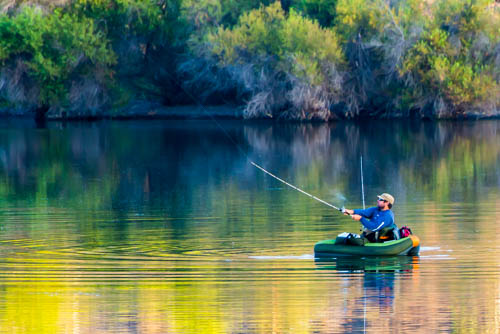
St. Johns River by Heather Hummel

St. Johns River by Heather Hummel
St. Johns River by Heather Hummel Photography
Showing posts with label landscape photography. Show all posts

Thursday, May 24, 2018

7 Steps to Stunning Images: A FREE Online Course by Heather Hummel Photography

7 Steps to Stunning Images: A Guide to Mastering Your DSLR Camera by Heather Hummel, land and seascape photographer, is a FREE online course that demystifies your DSLR camera and delves into the following 7 critical photography concepts as well as one "In the Field with Heather Hummel Photography" video. 
Course content includes:
  • Step 1: Shedding Light on Light Sources
  • Step 2: Conquer ISO Settings
  • Step 3: Understanding Aperture/Depth of Field
  • Step 4: Choosing a Shutter Speed
  • Step 5: Composition
  • Step 6: Tripods
  • Step 7: Filters
Through this overview of concepts, you should be able to pick up your DSLR camera and start shooting in Manual Mode instead of Program Mode!
Share your photos in our private Facebook Group titled Master Low Light DSLR Photography.
Click here to learn more about the 7 Steps to Stunning Images course. 
Happy shooting!

Tuesday, April 12, 2016

3 Filters Every Pro Photographer Uses

www.HeatherHummelPhotography.com

One of the leaps from amateur to pro photographer is investing in gear beyond the lens and camera body. From tripods to lens hoods to external flashes to filters, accessories are a photographer’s best friend.
There are three filters that every pro photographer carries in their bag, no matter what the photoshoot might be…UV, Polarizer, and Neutral Density Filters.

Each of these basic, yet necessary, filters enhances a photo in its own way and depending on the scene being shot. 

UV Filters
 
The simplest filter of the three is the UV filter. Likely the most purchased filter for its role of protecting lenses.

What’s its purpose? Photography is all about light, and the visible light spectrum runs from red to violet. Red light has the longest wavelength and violet light has the shortest. Light with a longer wavelength than red is called infrared, and light with a shorter wavelength than violet is called ultra violet or UV. That’s the basic lesson.
So, how does it translate to the camera?

Truthfully, today’s DSLR sensors really aren’t impacted by UV rays. The reason for using a UV filter is more of a protection for the lens against scratches. Out in the field, scratches are likely to happen, especially when many photographers forgo a lens cap during a photo shoot, relying on the protection of the UV filter.

Protecting the lens with a much less expensive UV filter is worth the investment, even if the filter isn’t really needed for its initial use. Make sure you order the right size for your lens…and buying an extra for each lens doesn’t hurt either.

Polarizer Filters


No landscape photographer I know leaves home without their polarizer filters. I say “filters” (plural) because I know they have one for each lens they’ll be using.

This filter is critical for two reasons. One, it enhances the blues in the sky, and when clouds are present, they add a dramatic contrast. The other benefit is that they cut reflection and glare, such as when photographing reflective surfaces such as water or glass.

The best polarizing filter results are images shot when the sun is at a 45-degree angle from the subject…or think of it like this—when the sun is over your left or right shoulder. If the sun is directly casting down, even with rays, this filter won’t do much good.

Polarizers are most effective when used with dramatic skies or when reducing or enhancing reflection in bodies of water.

When purchasing a polarizer filter, note that a “circular” polarizer will allow you to turn the filter until the desired lighting effect is achieved.

Lastly, some photographers stack a polarizer filter on top of their UV filter. This isn’t recommended because the odds of vignetting, especially with wide angle lenses, are increased, so it is better to switch the polarizer for the UV filter.

Graduated ND Filter


The graduated neutral density filter is ideal for outdoor photo shoots. Graduated neutral density filters are clear on the bottom and slightly opaque on the top. They have either an abrupt or a gradual shift in the middle of the filter and their purpose is to shade the brightest part of a scene. This creates two results. One is that by shading the brightest part of a scene, for example a sunset, it evens out the foreground, cutting down on over or under exposing parts of the photo. 
The most critical thing to realize when using this filter is that they work best with a scene where there is a fairly linear line, such as a horizon or cityscape. Otherwise, even with the graduated part of the filter, a shadowing line can be evident. 
Another purpose for this filter is to simply shade the image to slow the shutter speed. This comes in handy when photographing water, which helps to create a beautiful dreamlike effect as the water flows and is captured at a slower shutter speed. It creates the image without overexposure and it lets the water blur into the desired milky effect.

If you’re an amateur looking to add filters to your accessory bags, start with these and take the time to use each one for their intended purpose. You’ll start to see a vast improvement in the quality of your images.

For more information on photographing low light situations and water, check these out:
  

Note: Heather Hummel is an Amazon Associate.

Friday, August 21, 2015

Barren Optimism: How My Photography Is Influenced by Andrew Wyeth's Paintings


"Barren Optimism" Photo Credit: Heather Hummel Photography

I captured this self-portrait, titled "Wading Through," at King Family Vineyards in rural Crozet, Virginia. When I asked the owner, James King, about the field's status, he indicated that it had peaked two weeks earlier, on July 12th. He could not have known that was also my 50th birthday.

The next day, I ventured out to the field anyway. I passed a polo match, carrying my camera, lenses, filters, and tripod, and headed to the way-back corner of the property. When I turned the corner past the long fences, I liked what I saw. The sunflowers were mostly died off with just enough still hanging in there. The metaphor was strong. It set a different tone than the typical field of flowers--one that began a photo shoot that was inspired by my love for Andrew Wyeth's work.

The sunflower scene brought the words "barren optimism" to mind, Andrew Wyeth's "Christina's World" being my inspiration.

Having studied Wyeth's work some years ago, I knew that he and I shared a lot of commonalities beyond our mutual respect for hillsides and nature. We share the same birthday, July 12th (his 1917, mine 1965); he is one of five children, I am one of six; he had a medically challenged childhood that kept him home schooled, I was home most of my 3rd grade year due to a congenital heart defect that lead to my first open heart surgery in 1974; and one of his many muses was his dog who looked just like my own dog, Stephan.
It was Wyeth's work "Master Bedroom" that became my favorite even before Stephan came into my life.

"Stephan" Photo Credit: Heather Hummel Photography

Wyeth spent his years between his home in Pennsylvania and his summer home in Maine. I grew up in New England, but have traveled across the United States several times. We are both inspired by nature, and I find that his work rather barren with a hint of optimism, hence my term barren optimism.

As can happen with a muse or inspiration, I hadn't realized how much Wyeth's work had influenced my photography until I captured the sunflower field self-portrait. Wyeth remains a favorite, and during my future photo shoots, I will certainly have him in the back of my mind as I analyze the scene before me, the light, and the opportunity for barren optimism.

This post originally appeared on the Huffington Post.


Sunday, July 19, 2015

Photo Shoot in the Shenandoah National Park: Blackrock Summit


Rays North West ISO 400 f/10 1/160 18 mm Photo Credit: Heather Hummel Photography
I'd been meaning to hike the Blackrock Summit Trail, which is part of the Appalachian Trail in the Shenandoah National Park (Virginia), and last night I finally made it up there. The hike itself was short and easy, but the views at the summit were breathtaking. I arrived on the summit at about an hour and a half before sunset, leaving plenty of time to capture the sun’s rays playing with the mountain peaks between the clouds.

The Hike

I highly recommend the short hike (only 1 mile round-trip with an optional longer loop of 1.6 miles Blackrock Spur Trail & Treyfoot Mountain Trail) to Blackrock Summit, which is at an elevation of 3,092 feet. Simply follow the Appalachian Trail heading south for about a half a mile. The steepest part of the trail is at the beginning, and then it levels out a bit. Once you arrive, the summit is impossible to miss. The boulders at the top are large and require scrambling up them for the best views. They are not too difficult to climb, and the extra height is worth the scramble. Just be sure to wear good shoes.
 
South Western View ISO 200 f/10 1/40 18 mm focal length - Photo Credit: Heather Hummel Photography

This trail is especially great for photographers who don’t want to hike too far with all their gear, but don’t want to stop at just the overlooks along the parkway; this is a great short hike with remarkable payoffs in stunning panoramic views and photo opportunities.

The Photo Shoot
 
For this photo shoot, I used a graduated neutral density filter to shade the sky in order to even out the exposure. (Note: This Tiffen is a 77mm, so be sure to get the size for your lens.)

Tiffen 77mm Color Graduated Neutral Density 0.6 Filter


There were also enough clouds to add interest and contrast. 

Each image caption in this post notes the settings I used on my Canon EOS Rebel T3i, and I used the graduated neutral density filter in each shot. 

North West View ISO 200 f/10 1/25 18mm focal length - Photo Credit: Heather Hummel Photography
Destination Information
The Shenandoah National Park is a great place for photo shoots while also getting some exercise. Naturally, during peak foliage in the fall is the opportune time to visit, but the Shenandoah National Park and the Blue Ridge Parkway always provide spectacular scenic views and wildlife is abundant all year long.

Blackrock Summit View ISO 200 f/10 1/100 18 mm focal length - Photo Credit: Heather Hummel Photography
 
Shenandoah National Park is 105 miles long stretching from Front Royal, Virginia to Waynesboro and Charlottesville. Skyline Drive is the scenic roadway that meanders through the park. There are four entrances (and exits) from the park and the parking lot for the Blackrock Summit is at Mile Post 85 and the trail head is right there. 


Before you go, be sure to pick up some trail guides. Having hiked many of the trails in the Shenandoah, I can attest that it makes a big difference to be able to research these trails ahead of time.

Hiking Shenandoah National Park (Regional Hiking Series)


Best Easy Day Hikes Shenandoah National Park (Best Easy Day Hikes Series)
Want to learn how to master low light photography and to capture your own low-light photos? My book MASTER LOW LIGHT PHOTOGRAPHY is available on Amazon.

Saturday, July 11, 2015

In the Field with Heather Hummel Photography - Jacksonville, Florida

"In the Field with Heather Hummel Photography"
On location in Jacksonville, Florida shooting the sunset over the St. John's River. 


Want to learn how to master low light photography and to capture your own low-light photos? My book MASTER LOW LIGHT PHOTOGRAPHY is available on Amazon.

Thursday, July 2, 2015

Back Road Travels: The Old Coast Road from Bixby Bridge to Big Sur


2013-11-13-HeatherHummel_BixbyBridge.jpg
Photo Credit: Heather Hummel Photography

Over the years, I have driven across the United States eight times and up and down the western and eastern coastlines more times than I can remember. As a landscape photographer, of all the places I've traveled, Big Sur, California remains my favorite. In my automobile adventures with my camera and two dogs by my side, I've discovered some remarkable back road routes that steer clear of tourists, but none is quite like the one I'm about to share with you.

The Pacific Coast Highway (also known as Highway 1) in California is famous for its breathtaking coastal views. The Central Coast that runs from Carmel to Big Sur is, in my experience and opinion, the most scenic stretch. When the fog lifts, expect to see the beautiful jagged coastline framed with ice plant and rock formations. The land is dotted with cows and boasts views of the Pacific's frothy waves lapping along the shore, sometimes hundreds of feet below.

The back road from the famous Bixby Bridge to Big Sur is one that most tourists and travelers don't know about. Heading south, they often stop at the tourist turn off (scenic overlook) just before the bridge, hop out of their cars and snap a few selfies with the bridge behind them.

As you can tell from the image at the top, this is not what I did. The first giveaway is that my image has the Pacific Ocean behind it; whereas, the tourist turn off angle will net you the mountainside. Instead, take a left turn (when heading south, of course!) at the Bixby Bridge onto Old Coast Road. The views on this road provide an entirely different perspective for several miles. I have driven this back road route a few times, and can tell you that in my last trip it took two hours, but I also stopped to capture 95 images. Note that once you begin, it's not easy to turn around, and, as you'll see, I was in a Subaru Outback...AWD or 4 WD is highly recommended. (Don't say I didn't warn you!)

Below are some of the images that I selected in order to show a bit of what this alternate route looks like. The captions under the images tell the rest of the story.

2013-11-13-BixbyBridgeLeaves.jpg
Photo Credit: Heather Hummel Photography
Bixby Bridge from the Old Coast Road. You can see a smidgen of the road/entrance on the right.

2013-11-13-BigSurBackRoads029.jpg
Photo Credit: Heather Hummel Photography
I set out with my dogs and Canon the day after a big storm. As you can see, trees were down, but you can't stop a Subaru with a few sticks in the road.

2013-11-13-BigSurBackRoads032.jpg
Photo Credit: Heather Hummel Photography
After clearing the road, I came upon this scenic view of Redwood trees a few tenths of a mile later. Definitely worth picking up a few sticks for.


2013-11-13-BigSurBackRoads073.jpg
Photo Credit: Heather Hummel Photography
About midway, at the peak, the clearing provides stunning panoramic views, and this "Rock Pasture" in the midst.

2013-11-13-BigSurBackRoads049.jpg
Photo Credit: Heather Hummel Photography
After photographing the Rock Pasture, I looked down to see where we were heading...Seriously? I was glad to be in my Subaru! Another example as to why they (and I) highly recommend an AWD or 4WD vehicle. 


2013-11-13-VantagePoint.jpg
Photo Credit: Heather Hummel Photography
As the road starts to come down the other side into Big Sur, the views of the Pacific Ocean and Highway 1 open up again.

2013-11-13-BigSurBackRoadsHwy1View2.jpg
Photo Credit: Heather Hummel Photography
One last peak before descent.

If you're already in Big Sur, you can take Old Coast Road north and just go up a few miles and see these last few views shown. From the Bixby Bridge end, it's quite a drive - about 14 miles of rough roads - through the redwoods and mountains. The experience is very unique compared to what most visitors do, but be sure you have the right kind of car and be ready to be jostled. The captivating views and poetic beauty is worth the trip.


Want to learn how to master low light photography and to capture your own low-light photos? My book MASTER LOW LIGHT PHOTOGRAPHY is available on Amazon.

Wednesday, July 1, 2015

DSLR Cameras: The Top 3 Best Sellers Under $500

Shopping for a new DSLR camera can be overwhelming, even for advanced photographers. So many choices, pixels, and lenses. Since I am in the market for a new DSLR camera myself, I pulled together a list of the top 3 (because, honestly, 10 is overwhelming!) DSLR cameras and kit lenses (18-55mm) priced under $500.  Yes, you can pick up a great DSLR camera and an 18-55mm lens for under $500.

Keep in mind these tips:

1. There are variations to kits, for example you might want to add a telephoto lens if you know you will be using it from the get-go. There are kits available with a full range of filters, camera bags, and extra lenses.

2. Megapixels vary from camera to camera. If you plan on enlarging photos, aim for a camera with higher megapixels for clarity and sharper images. But, honestly, I have an 18 MP camera that enlarges photo to 16x20 very nicely.

Here are the Top 3 Best Sellers in order by ranking, not price.


1. $399 Canon EOS Rebel T5 EF-S 18-55mm IS II Digital SLR Kit


Features:
  • 18 megapixel CMOS (APS-C) sensor with DIGIC 4 image processor
  • 3-inch LCD TFT color, liquid-crystal monitor for easy viewing and sharing
  • EOS 1080p full HD movie mode helps you capture brilliant results
  • Features include continuous shooting up to 3fps, Scene Intelligent Auto mode, creative filers, built-in flash and feature guide


2. $496.95 Nikon D3300 24.2 MP CMOS Digital SLR with AF-S DX NIKKOR 18-55mm f/3.5-5.6G VR II Zoom Lens (Black)

Features:
  • 24.2 MP CMOS DX-format sensor
  • 5 frames per second continuous shooting
  • 11 AF points with 3D tracking
  • ISO 100-12800 (expandable to 25600)
  • 1080 (60, 50, 30, 25, 24 fps) HD video (MPEG-4/H.264/MOV)
  • 3 inch LCD with 921,000 dots
  • Expeed 4 processing


3. $499 Canon EOS Rebel SL1 Digital SLR with 18-55mm STM Lens


Features:

  • 18 MP APS-C CMOS sensor
  • 4 FPS continuous shooting
  • 9 point AF system, center AF point is cross-type
  • ISO 100-12800 (expandable to 25600)
  • 1080 (30, 25, 24 fps) and 720 (60, 50 fps) HD video (29min limit, H.264 format)
  • 3" touch panel LCD screen with 1,040,000 dots
  • Movie Servo AF for continuous focus tracking of moving subjects

Although I've been a Canon user for years, I'm personally tempted to go to the other side and try a Nikon just so I can argue both sides of a coin. Heads, Canon, Tails, Nikon. Win-win. If you have a favorite brand, some, I know, prefer Sony or others, leave a note in the comments! I'd love to know what people shoot with. 

Thursday, June 25, 2015

Inspirational Photography and Quotes

Introducing Heather Hummel's
newly launched Inspirational Photography and Quotes
line on RedBubble

Inspired by both nature and human nature, all photography is Heather's original work and all quotes are her original thoughts, except for one, which is her grandmother's, Dorothy Crispo (as shown on the left).


Besides immersing herself in photography, Heather Hummel is a ghostwriter and an award-winning, best-selling author. Her published works include:
Journals from the Heart Series:
Whispers from the Heart (2011)
Write from the Heart (2011)
Nonfiction
GO BIKE & Other Signs from the Universe (2011)
Gracefully: Looking and Being Your Best at Any Age (McGraw-Hill, 2008),
Essays:
Messages of Hope and Healing ( Sunpiper Media, 2006)
Blue Ridge Anthology (Cedar Creek, 2007) with David Baldacci and Rita Mae Brown
Awards:
2009 Mature Media Awards, Merit Award
2009 New York Book Festival, Honorable Mention

Heather's books have appeared in newspapers such as: Publishers Weekly, USA Today and the Washington Post; and in magazines that include: Health, Body & Soul, First, and Spry Living, a combined circulation of nearly 15 million. A graduate with High Distinction from the University of Virginia, Heather holds a Bachelor of Interdisciplinary Studies degree with concentrations in English and Secondary Education. She is currently earning a Ph.D. in Metaphysical Sciences.
Visit Heather’s website at http://www.heatherhummelauthor.com/
Follow Heather on Twitter:
http://twitter.com/#!/HeatherHummel
"Like" Heather's Fan Page http://www.facebook.com/HeatherHummelFanPage


Wednesday, June 24, 2015

An HDR Photo Expedition - Cottonwood Pass, Colorado

Few days go by that I don't spend time writing or editing balanced with capturing images. It's why I'm a self-titled PhotoNovelist! After several hours of editing a client's manuscript one morning (a very funny and well written manuscript, I'll add), I loaded my dogs up in the car and headed toward Cottonwood Pass near Carbondale, CO.

As mostly a landscape photographer, I started to dabble in HDR (High Dynamic Range) photography. It intrigues me because of the art of it. With HDR a lot of thought goes into an image capture both during the shoot and in the post-processing.

Composition is still always at the forefront of my mind. It's the first thing I look for, even before lighting. I then consider lighting, but in a different way than non-HDR photography, such as traditional or black and white. Since HDR's role (simplified) is to address shadows in an image, as I'm capturing one I consider how the shadows are going to work to my advantage (or disadvantage).

In the picture of the 1888 schoolhouse, I used a polarizing filter to enhance the sky and the clouds, all the while considering the sunlight on the fields behind the schoolhouse and how that would play into the end result.

For the fence image, I waited several minutes for the sun to come out from behind the clouds so it would highlight the fence and not wash out the sky.

I was thrilled to see the reflection of the barn on the pond in the next image. The polarizing filter would have removed the reflection, so I used it to once again enhance the sky and to allow the reflection on the water.

The three at the bottom are additional favorites from today's shoot. Each one reminds me how amazing and what a beautiful place Colorado is!


Visit my photography website at www.HeatherHummelPhotography.com for more photos!


Monday, June 22, 2015

Q&A With Retired Firefighter Doug Bailey, Lightfinder Photography

2014-07-07-untitledshoot060.jpg
Photo Credit: Doug Bailey

Last year Doug Bailey, a Southern California firefighter, put down his firefighting gloves and jacket one last time. Now, as a retired firefighter, Doug spends his days capturing breathtaking images. In this compelling interview, Doug shares the struggles and the poetic similarities of the two different careers.

HH. Describe the feeling when the alarm sets off at the firehouse.

DB: I was a firefighter for 25 years, first as a reserve and then full time. I prepared myself for any situation that may arise, but never knew what those situations may be. So when the alarm sounded my feeling was anticipation suffused with happiness. I knew that by the end of the day I will be deeply satisfied by having done something I was created to do. And always, there was a deeply rooted sense of joy.

2014-07-07-20131126_MG_8046Edit.jpg
Photo Credit: Doug Bailey

I was fortunate enough to have worked in a seaside location in Southern California, so what began as a small hobby of taking morning and evening surf photos and posting them to my social media friends, turned into a real passion. When I think about it, going to work at the fire station was a lot like going on a photo shoot. I have much the same feeling of joyful anticipation. You never know what you may find! There is also a similar sense of deep satisfaction. I believe knowing one's life purpose allows for the deep satisfaction in job or photo shoot.

HH: Are there any similarities between firefighting and photography?

DB: On first thought it would seem that the hurry, pressure, high stress critical choices and controlled efforts used in fighting fires has nothing to do with photography. But I am a strong believer that one's life is built much as a house. First the foundation, then the walls, next the roof, etc. So each life experience builds on what has gone before. So, do I use my fire experience when I take photos? Yes, in a thousand intangible ways. From sizing up a fire scene to sizing up a landscape scene. From quickly establishing an emergency strategy to quickly composing a photo before the light fades. The same hurried, but not rushed, feelings and skills emerge. And humility surfaces, knowing that few are so privileged as to make such a difference in other people's lives.

2014-07-07-untitledshoot396Edit.jpg
Photo Credit: Doug Bailey

Saving lives or property is deeply satisfying and humbles my spirit. But so does touching someone's life with a beautiful photo that reaches their soul. For instance, right now I am texting with a major hospital chain's bio ethicist. His job is to help families make life or death decisions about their loved ones. He watched my YouTube photo video "Journey" and wanted me to know how much it helped him after a hard day. He is forwarding the video to his Chief Operating Officer for evaluation in their work. Now, that is very cool, and humbling.

HH: What is it about landscapes versus portraits or fine art that you prefer?

2014-07-07-untitledshoot419.jpg
Photo Credit: Doug Bailey

DB: I shoot landscapes for a couple of reasons. First, there is a certain feeling of adventure and discovery whenever I set off on a shoot. That very much attracts my attention. Next, there is the feeling of being lost in time and moment while composing a photo. My friend calls it the "Zen Moment" of photography. Time stops and I become lost in the scene, I could be there five minutes or five hours and that feeling of time suspension is always with me. Very relaxing. Third and most important, I believe we are made to enjoy and celebrate the beauty of creation. To capture and share just a bit of that beauty makes my life full, and to be in touch with the creative part of my being brings me close to my Creator. That is not to say I am above a great portrait session or fine art, I definitely have not finished growing yet!

HH: Which of your images is your favorite?

2014-07-07-SunriseJourney_.jpg
Photo Credit: Doug Bailey

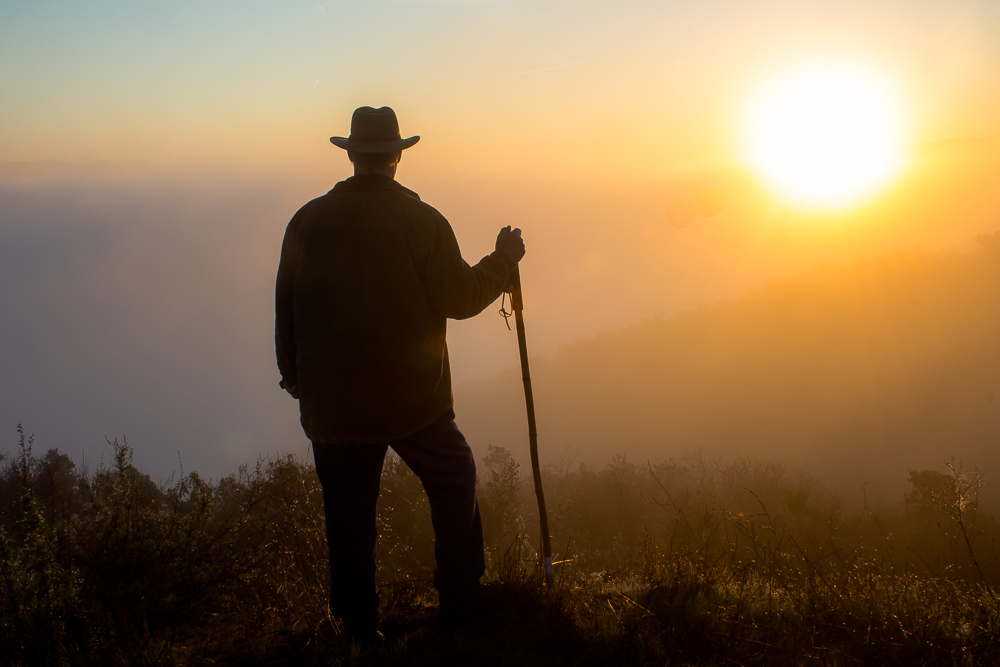
DB: My first concept of photography was as a journey, and I was greatly inspired by Robert Frost's "The Road Not Taken". You know, the one that begins "Two roads diverged in a yellow wood, and sorry I could not travel both..." I had a definite choice to make when I left the fire service, and I chose photography as my life's pursuit and passion. Not exactly an easy road! So my development as a photographer has been very much like a journey. I have to say my favorite photo would be the original Lightfinder signature self portrait where I am standing on a misty hilltop with my hiking staff and hat and watching the rising sun. That photo is my touchstone, the one that will always point me back to myself if I wander too far afield.

HH: You're known as the "Lightfinder." What is your thought process when analyzing light?

2014-07-07-20131108_MG_7147EditEdit.jpg
Photo Credit: Doug Bailey

DB: It is the light, always the light, that first attracts my eye. Everything flows from finding that sweet light, and I have had the good fortune to find more than my share of that pure, beautiful light. So I look for light crossing in front of my lens and try to shoot a close into the sun as I can. In my mind I think of it as sailing close to the wind.

2014-07-07-20131102_MG_7010Edit.jpg
Photo Credit: Doug Bailey

I need to say here that another important and tangible component to my personal style is my love of music composition. One of my earliest childhood memories is that of looking at the family piano and wanting to create music just by placing my fingers on the keyboard. At the age of twelve I began to study music seriously, first as a classical pianist and then as a composer and singer/songwriter. I have never stopped. I find a natural connection between composing music and composing a photo. I look for the light, subject, lines, and harmony in every photo I take. Since I love a simple, uncomplicated composition with a pure melody and sweet harmonies, I see that translating into my photo style, which is why I came up with the term "Lyrical Photographer" So, the light begins the composition, the lines and melody, lyrics and harmony completes. That is the essence of "Lightfinder."

HH: Where have your images been, or will be, on display.

2014-07-07-untitledshoot529.jpg
Photo Credit: Doug Bailey

DB:
June-July 2012, San Diego County Fair
June-July 2013, San Diego County Fair
November 2013: Metalography Gallery, Temecula California
December 2013: Calumet Photo San Diego
June 2014, Temecula Art Festival
June-July 2014, San Diego County Fair
Forthcoming
March 2015, City of Temecula Featured artist in the Old Merc Theater.
Youtube video Journey

2014-07-07-OceansidePier_.jpg
Photo Credit: Doug Bailey

Thank you, Doug for sharing your wisdom and images!