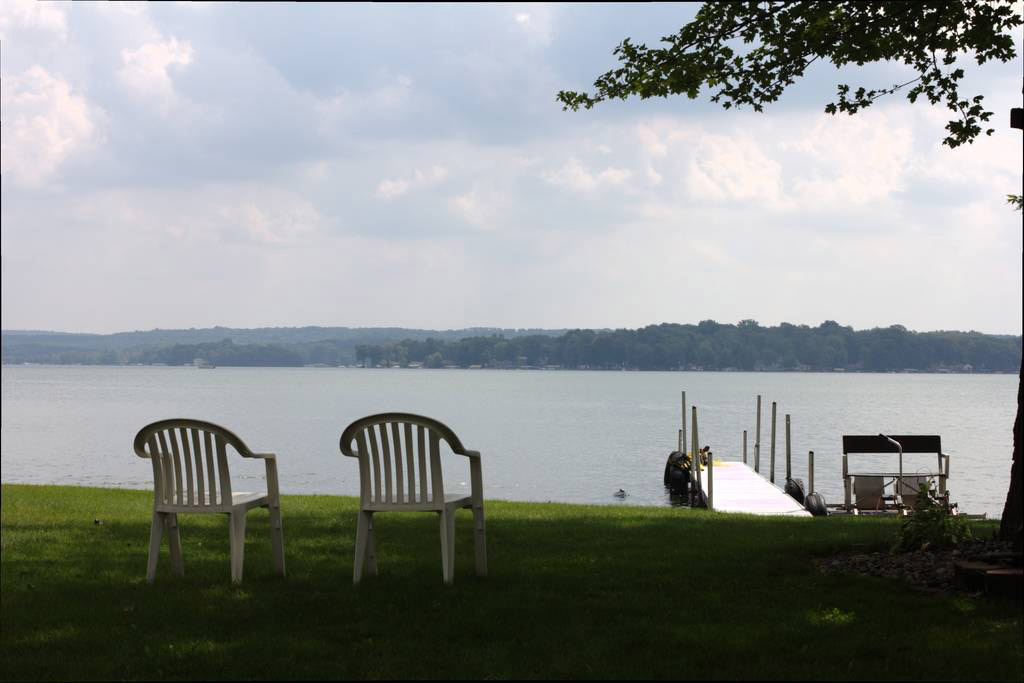
St. Johns River by Heather Hummel

St. Johns River by Heather Hummel
St. Johns River by Heather Hummel Photography
Showing posts with label Commercial Photography. Show all posts

Monday, September 14, 2015

The Evolution of Real Estate Photography


Real estate photography has historically showcased disastrous images. We've all seen the images of a bathroom with the toilet seat up, a bedroom with an unmade bed or the laundry basket overflowing, kids' toys scattered about their rooms, personal photos covering the walls, and so on and so forth. Add to the list images that are blurry, too dark, too light, or taken from a misguided angle. It's a wonder some houses sold at all.

Photo Credit: Heather Hummel Photography
Recently, with the advent of websites like Zillow and Trulia, the pressure is on for agents to deliver high quality images to potential buyers. After looking at a lot of real estate sites, I couldn't help but notice that the quality of images has increased greatly. It is evident that real estate agents are taking online presence and the influence of images much more seriously, and I believe this is due to their effort to hire professional photographers for the jobs. Yes, anyone can take a photo with an iPhone or Droid, but that doesn't mean the quality is of a professional level. However, there is some debate that the images of today aren't really fairly representing homes. As one Facebook friend in Boise, Idaho pointed out, "Some of these photographers are Photoshopping images for realtors so poorly; you don't know if you're shopping for properties in Boise or in Toontown." He is correct. Real estate agents have to keep it real. Too many images make a home look bigger and brighter than it really is, which leads to a big letdown when potential buyers show up for a viewing.


Photo Credit: Heather Hummel Photography
I consistently photograph new listings for Charlottesville, Virginia's seasoned real estate agent, Joan Esposito of Roy Wheeler, who says, "A great photographer is critical to our marketing plan. They can make every property, no matter what the price range, stand out...and this makes our phones ring!" Joan is great to collaborate with because she has a keen eye for a listing and the type of images that best represent it. Staging is also an art that she intuitively knows how to do, and one that makes photographing properties much easier. Besides her listings, I have photographed properties in coastal northern Florida, which is a completely different type of community than the Blue Ridge Mountains. Regardless of location, though, there are simple staging concepts that make for good interior real estate photography.

1. Turn on the lights. If there isn't enough light, create it and be sure to replace blown bulbs.
2. Make the beds; ideally with linens that match.
3. Fold towels in bathrooms and place on shelves or hang neatly on racks.
4. Declutter all counter tops in the kitchens and bathrooms, but leave a splash of color in the form of fruit or flowers on the kitchen counter.
5. Remove pictures and magnets from the refrigerator.
6. In the kitchen, put away cluttering items, such as trash cans, sponges, soap, and dish or cleaning cloths.
7. Vacuum carpets and hard wood floors.
8. De-clutter and de-personalize so potential buyers can imagine the home as their own.

Once the photos are professionally captured, real estate photographers greatly benefit from outsourcing the editing work to a quality service such as PhotoUp in Grand Rapids, Michigan and Cebu, Philippines. Real estate photographer Jason Johnson is one photographer who takes advantage of PhotoUp's editing services.


"Before" Photo Credit Jason Johnson, Grand Rapids, Michigan


"After" Edit by PhotoUp: Photo Credit Jason Johnson, Grand Rapids, Michigan

"Before" Photo Credit Jason Johnson, Grand Rapids, Michigan
 
"After" Edit by PhotoUp: Photo Credit Jason Johnson, Grand Rapids, Michigan

However, PhotoUp isn't only a photo editing service. They champion photographers and help them grow their business. "We're the only ones out there doing this transparently, and real estate happens to be our niche. We have a team in the Philippines that work in a Google-like office. It's a very creative environment. We find great ways to impact the photographers and the communities in which we work," says Chris Palmer of PhotoUp. While some photographers might be leery of outsourcing, Chris points out that they allay those fears. "We do customized stylization so clients who want a particular style and consistent look to their images can have it. We see the relationship with our clients as a collaborative team effort where we dedicate our time to learning the photographer's particular style."
"Before" Photo Credit Jason Johnson, Grand Rapids, Michigan

"After" Edit by PhotoUp: Photo Credit Jason Johnson, Grand Rapids, Michigan
Building a real estate photography business takes a lot of work from marketing to shooting to editing to delivering, so to be able to outsource the editing is a great advantage for freeing up valuable time. "We're always exploring new ways to help photographers scale and grow their businesses. The ultimate goal for a real estate photographer is to have a team of photographers shooting for them and an editing team processing their images because editing isn't a revenue producing function. Photographers ought to be out there shooting. With us, they have access to editing twenty-four hours a day and five and a half to six days a week, depending on the plan they are on. Instead of spending hours editing, they can upload their images to us and go enjoy a glass of wine with their spouse." In Florida, I photographed a client's house while passing through. It was a cloudy day, so the skies were gray. I was leaving the next morning and wasn't able to go back and re-photograph it with blue skies.

"Before" Photo Credit: Heather Hummel Photography
"After: Dusk" Edit by PhotoUp Photo Credit: Heather Hummel Photography

"After: Blue Sky" Edit by PhotoUp Photo Credit: Heather Hummel Photography
So, I sent this image in RAW format to PhotoUp and was very happy with their editing work. The addition of blue sky and the dusk effect were just right. The images were sent back to me quickly and efficiently, and I was able to pass them on to my client.

At the time of writing this article, Charlottesville has approximately 310 real estate listings by agents. As I searched through listings, I still found images with toilet seats up, magnets on the refrigerator, and some that could clearly have used a professional editing service, but overall the quality was improved.

One thing is for sure, each property boasted closer to 35 images, versus the dozen or so used in the earlier days of online real estate. There is no doubt that the evolution of real estate photography has reached milestones and continues to grow.

Note: This blog post from PhotoUp provides valuable tips as well.

Tuesday, August 18, 2015

iPhoneography Pro: A Q&A With Commercial Photographer Robert Morrissey

"The one quick thing iPhone users need to understand is that the minute you switch over to camera mode your iPhone is no longer a phone but a camera. If you want to take good photos you need to understand photography."
- Robert Morrissey, Commercial Photographer

iPhone photography, termed iPhoneography, has been credited with some amazing photographs to the point where many photographers are putting away their DSLR cameras and lenses while grabbing their iPhone when heading out the door for a photo shoot. Add to it that amateurs are crossing the professional barriers with a touch of the iPhone screen, and there is little argument that iPhoneography is here to stay. Those who have the iPhone 6 are experiencing a new sensor with faster focus speeds and better low light images. The screen on the iPhone 6 is 4.7 inches with a 326ppi resolution, which Android users have enjoyed for a while now.
So, what is the next level for iPhoneography? That is exactly what is addressed in commercial photographer Robert Morrissey's iPhoneography Pro: Techniques For Taking Your iPhone Photography To The Next Level (Amherst Media, August 2015). I reached out to Morrissey, who took a break from his busy work as a commercial photographer to answer some questions about his book and the topic of iPhoneography.

HH: What gave credence to writing a Pro book on iPhoneography?

RM: When I was asked to write this book I honestly wasn't too sure about doing it. I had previously written two books on lighting for commercial photographers, so I knew I could write a book. But taking a professional approach to the iPhone was a little nerve-racking at first. However, once I ran several tests on the iPhone, I knew I could create a great book, with strong images and solid lessons without harming my professional reputation.

HH: Who is the audience for iPhoneography Pro?

RM: Truly this book is for everyone with an iPhone, especially anyone that has read other iPhone photo books and wants to take their work further. This book guides the reader well beyond many other iPhone books out there. The fact is that the iPhone has become the new portable camera that everyone seems to have on them at all times.

In the book I go over several photography techniques that apply to all cameras, but after that, I push the iPhone to its limits. The one quick thing iPhone users need to understand is that the minute you switch over to camera mode your iPhone is no longer a phone but a camera. If you want to take good photos you need to understand photography.

HH: Did you learn anything new and exciting about the iPhone camera during the writing phase?

RM: Oh yeah. I learned that a skilled photographer can create an amazing collection of images, generate income and compete professionally with their iPhone. Add in the ability to use Photoshop and you have a professional grade camera that can compete with many pros sitting on expensive cameras.

HH: What is one specific thing you want photographers to know about iPhoneography?

RM: The one thing Id like people to know about the iPhone camera is that this is a serious piece of equipment when used properly and in the right hands. I would like to have Sports Illustrated Swimsuit or Pirelli or Vouge give me a chance to show off the iPhones capability shooting their calendars or some covers. I believe my team could get amazing shots that no one, and I mean no one, would be able to tell they were shot with an iPhone camera. I am 100% serious about this.

HH: If you could only photograph oceans or mountains for the rest of your years, which one would you pick?

RM: I thought about this question a lot. Truthfully if all I could do was take photos of one thing I would shoot myself. As a human wired to be a photographer basically from birth I wouldnt enjoy photographing only one thing. The world is my canvas and I have to paint with my camera. There are way too many things to take photos of and I believe that I still haven't taken my best photo yet.


Robert Morrissey is a commercial photographer who also does speaking engagements for camera clubs and other related events. To learn more, visit his website at: http://morrisseyphoto.com

This post originally appeared on the Huffington Post.  

Want to learn how to master low light photography and to capture your own low-light photos? My book MASTER LOW LIGHT PHOTOGRAPHY is available on Amazon.